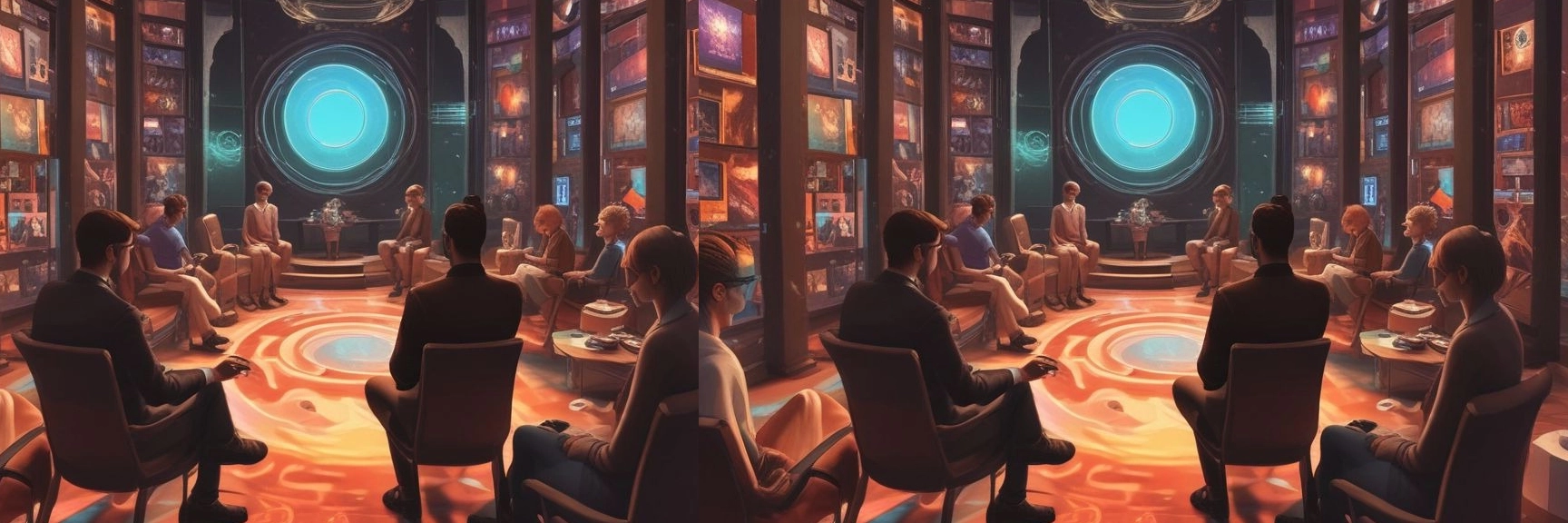
Statistical Analysis of Player Longevity in the Metaverse – Second Life Game
This article explores the phenomenon of extended player tenure in Metaverse-based MMORPGs, with a specific focus on Second Life. By bridging quantitative sociological data with esoteric metaphysical theories, we examine the mechanisms of retention, the concept of “Digital Anchoring,” and the ethical implications of prolonged virtual existence. Furthermore, we analyze the final stage of the digital lifecycle: the cessation of the avatar and the metaphysics of account deletion.
Introduction: The Immortal Avatar
In the study of digital anthropology, the Metaverse represents more than a gaming environment; it is a distinct plane of existence. Unlike traditional MMORPGs driven by linear progression (levels, gear scores), platforms like Second Life operate on a model of endless creation and social simulation. The avatar ceases to be a mere tool for gameplay and becomes a Doppelgänger a digital projection of the user’s psyche.
Statistical data suggests that the average lifespan of a player in a traditional MMORPG (such as World of Warcraft) ranges between 6 to 12 months before a significant hiatus occurs. However, in Second Life, the tenure curve defies standard distribution. A significant demographic has remained active for over 15 years.
This begs the question: What binds the consciousness to the screen?
Statistical Analysis: The Era of the “Digital Settler”
Quantitative analysis of user logs indicates that the retention rate in the Metaverse correlates directly with Asset Accumulation and Social Capital.
- The 5-Year Threshold: Data suggests that players who surpass the 5-year mark in Second Life rarely quit entirely. They transition from “Explorers” to “Settlers.”
- The Intimacy Paradox: Players often report higher satisfaction with virtual relationships than physical ones. The Metaverse filters out biological imperfections (age, disability, appearance), allowing for a “purer” form of communication.
- Economic Enmeshment: Users who own virtual land (simulations) or successful in-world businesses exhibit a retention rate nearly 80% higher than casual users. The virtual economy creates a “sunk cost” that is not merely financial, but emotional.
The Esoteric Mechanism: Why Do They Stay?
From a scientific perspective, the retention is driven by dopamine feedback loops and social validation. From an esoteric perspective, the phenomenon is far more complex. The player stays because they have engaged in Digital Alchemy.
- The Construction of the “Astral Body”
Esoteric traditions suggest that the human soul desires to manifest its ideal self. In the physical world, this is limited by biology. In the Metaverse, the user constructs an Astral Body the avatar. This avatar is often younger, more beautiful, or stronger than the physical vessel.
The Trap: The player falls in love with their own reflection. They prefer the digital reflection over the physical reality. This is the modern mirror of Narcissus, but with a twist: the reflection loves them back.
- The Dissolution of Time
In the Metaverse, the avatar does not age. A player who has spent 15 years in Second Life controls a vessel that is eternally youthful. This grants a sense of immortality that the physical body is denied. Staying in the game is an unconscious rebellion against mortality.
Is it Beneficial to Remain? (Scientific vs. Esoteric Ethics)
Is it “good” to remain in the game for decades?
The Scientific View:
Prolonged immersion is often viewed skeptically by psychology, citing risks of dissociation, depersonalization, and the atrophy of real-world social skills. However, recent studies in gerontology suggest that for the elderly or disabled, the Metaverse provides vital cognitive stimulation and a sense of purpose that staves off depression.
The Esoteric View:
Mystically, the Metaverse is a “Bardo” an intermediate state between physical reality and the abstract realm of mind.
The Positive: It is a training ground for the soul to learn that “reality” is malleable. It teaches the user that consciousness creates reality.
The Negative: There is a danger of “Spiritual Bypassing.” If the player uses the Metaverse solely to escape the lessons of the physical world (karma, confrontation, aging), they stagnate. They become a “Lost Soul” in the machine, ignoring the spiritual work required in their biological life.
Conclusion: It is beneficial to stay only if the player views the Metaverse as a tool for growth, not a shelter from existence.
The Final Logout: How Accounts Die
The end of a player’s journey in the Metaverse is a somber event, mirroring physical death but with distinct procedural differences.
- The Fade (The Long Goodbye):
Most veterans do not quit abruptly. They suffer from “Metaverse Fatigue.” They log in less frequently. They stand idle in empty clubs. This is the digital equivalent of a terminal illness a slow withdrawal of the life force (attention) from the avatar. - The Suicide of the Avatar:
In Second Life, the ultimate act of severance is the deletion of the account. Scientifically, this involves:
Revoking payment information.
Submitting a support ticket for account closure.
The wiping of the inventory (years of accumulated assets, memories, and creations vanish instantly).
The Esoteric Consequence:
When a player deletes their account, they are performing a Dissolution of the Ego. The “Digital Tulpa” (the avatar) dies. The energy invested into that persona must return to the source (the player). This often results in a profound period of depression or liberation in the physical world. The player must reintegrate the fragments of their personality that were locked inside the code.
Conclusion
The Metaverse, and specifically Second Life, serves as a modern philosophical laboratory. The longevity of players is not merely a statistic of addiction; it is a testament to the human desire for a reality where the spirit is unburdened by the flesh.
Whether it is scientifically healthy or esoterically wise to remain depends on the intent. If the avatar is a mask to hide behind, the Metaverse is a cage. If the avatar is a mirror to understand oneself, the Metaverse is a temple. When the final logout occurs, it is not just a server disconnection it is the soul reclaiming its fragmented light from the digital abyss.