Second Life: Rediscovering Connection Through the Rhythm of Virtual Dance
In the vast expanse of the internet, where social media often reduces interaction to text and likes, there exists a digital frontier that offers something far more immersive: Second Life. Launched in 2003 by Linden Lab, Second Life is not a game in the traditional sense there are no princesses to rescue, no levels to beat, and no final boss to defeat. Instead, it is a sprawling, user-generated virtual universe, a sandbox where individuals from every corner of the globe create digital avatars and live parallel existences. Within this infinite grid of sims (simulated environments), users can build businesses, attend universities, fly through fantastical landscapes, and, perhaps most poignantly, dance together.
Dancing in Second Life is far more than a mere graphical feature or a scripted animation; it has evolved into a profound cultural phenomenon and a vital mechanism for social reconnection. As physical barriers and the increasing isolation of the modern world limit our opportunities for genuine human contact, the virtual dance floors of Second Life have become unexpected sanctuaries of community.
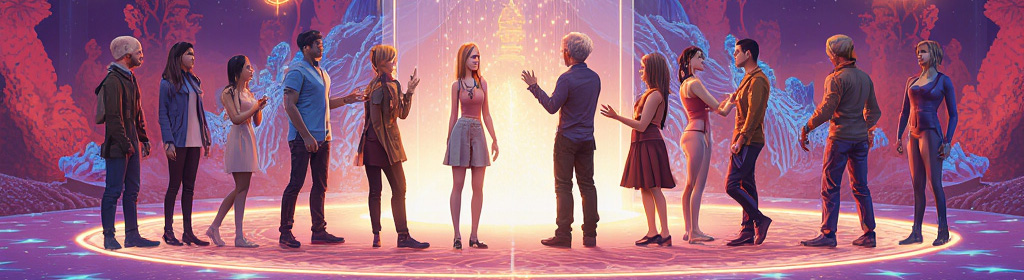
When an avatar steps onto a dance floor in Second Life, they are engaging in a form of non-verbal communication that transcends the physical. Participants join groups where their avatars move in synchronized rhythms, guided by sophisticated “dance HUDs” (Heads-Up Displays) or choreographed sequences. This visual synchronization creates a powerful sense of unity known as “copresence”—the feeling of being there with others. Even though the physical body is sitting still in a chair in the real world, the mind and the digital representation are moving in harmony with a crowd.
This shared activity acts as a powerful social lubricant. Much like a club or a festival in the real world, the virtual dance party provides a safe space to meet strangers without the social anxieties that often accompany face-to-face interactions. Here, judgment is based on personality, creativity, and digital style rather than physical appearance. The anonymity of the avatar allows users to shed their insecurities and express themselves more freely. As the avatars sway, spin, and glide to music streamed from live DJs around the world, the local chat fills with conversation, laughter, and the formation of friendships that often extend beyond the virtual border.
Furthermore, group dancing in Second Life serves as a ritual of reconnection for many who are physically unable to engage in social activities due to disability, illness, or geographic remoteness. It restores the sense of belonging to a tribe. The rhythmic movement, combined with the auditory experience of music, triggers emotional responses that bridge the gap between the screen and the self. It validates the human need to be seen and to be part of a collective energy.
In conclusion, Second Life demonstrates that the human need to move together is not bound by flesh and bone. Through the medium of group dancing, the platform offers a unique blend of technology and soul, providing a space where loneliness is replaced by the rhythm of a global community. It reminds us that even in a virtual world, the dance remains a timeless language of connection.