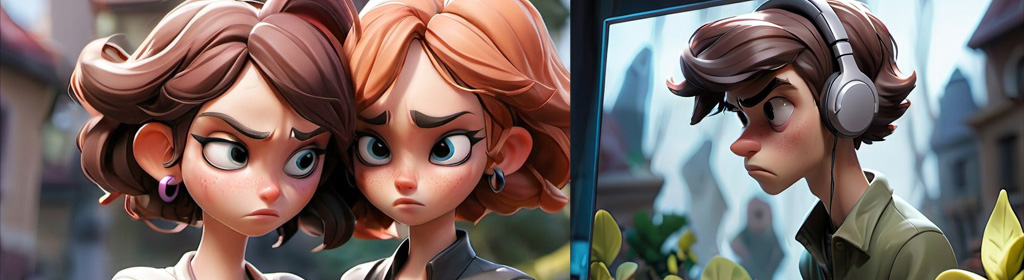
Beyond Appearances: The Human Dramas Behind the Avatar. A Study on Escapism in Second Life
Second Life is often perceived from the outside as a simple video game, a space for entertainment where people assume fantastic identities for fun. However, a closer analysis of the sociology of this metaverse reveals a reality that is much darker, yet profoundly human. For many residents, Second Life is not a toy, but a safety net, a hospital for the soul, or a decompression chamber from a reality (RL) that has become unbearable.
Every avatar masks a story. Every name above the head hides a human being who is likely fighting demons we cannot see. To truly understand this community, we must synthesize the major reasons why people choose to escape into this digital world.
Synthesis of Causes: Why Do We Escape to Second Life?
The reasons that bring a person to Second Life are often linked to the dissonance between who they are and who they wish to be, or between the life they have and the life they desire. Here are the main categories of dramas and needs that form the basis of this escape:
- Physical Causes and Anatomical Limitations
This is perhaps the most profound form of escapism. The avatar offers a perfect body, suppressing biological inequalities.
Disabilities and Illness: Many users are confined to wheelchairs, suffer from debilitating chronic illnesses, are in terminal stages, or have physical deformities. In Second Life, they can walk, dance, fly, and practice sports. Regaining the sensation of an “intact body” is a powerful form of therapy.
Self-Image and Aging: People who do not accept themselves physically in real life (weight issues, advanced aging) can create the avatar that represents their ideal of youth and beauty, thus recovering lost confidence.
- Emotional and Psychological Causes
This is where we seek healing for wounds that are invisible to the naked eye.
Loneliness and Social Isolation: In an increasingly individualized real world, many people (especially the elderly or those with severe social anxiety) have no one. SL offers a community that is “always awake.”
Trauma and Abuse: Survivors of domestic abuse or childhood trauma find in SL a controlled environment. No one can physically touch them without their consent. It is a safe space to learn to trust again.
Identity and Gender Exploration: For people struggling with their gender identity or sexual orientation in conservative or hostile real-life environments, SL is an essential laboratory where they can “try on” life as a person of a different gender without immediate social risks.
Depression: SL acts as a temporary antidote to depressive apathy. The ability to achieve something (build, create) and receive social validation combats the feeling of uselessness.
- Material and Economic Causes
Economic reality can be suffocating. Second Life offers an illusion (or compensation) of material stability.
Poverty and Professional Failure: People who have lost everything in economic crises, who live in modest conditions, or who cannot afford luxuries in real life, drive expensive cars, live in huge mansions, and wear designer clothes in SL. This “facade of success” allows them to feel respected and equal to others.
Inability to Fulfill Dreams: The architect who cannot find work builds cities in SL. The singer without a voice becomes a DJ. The man who could not have children raises a virtual family.
- Relational Causes
Unhappy Marriages: Many residents are in “empty” relationships in real life. They seek in SL the emotional intimacy, listening, and passion they no longer have at home.
Loss of a Loved One: Widows or parents who have lost their children sometimes come to SL just to feel they are part of a community again, to forget the silence of the grave or the empty house.
Collective Consciousness: The Avatar Has a Soul
This study obliges us to a critical realization: behind every pixel is a beating heart.
When we interact in Second Life, we are not talking to program code. We are talking to a human being who probably came here because they feel invisible in the real world.
Why we must treat avatars with respect and humanity:
The Impact of Words: Because many come to SL already wounded or vulnerable, a harsh remark, a betrayal, or a brutal rejection in the game can have devastating effects on their mental state in real life. There is no “it’s just a game” for someone who has pinned their hopes on that world.
Emotional Responsibility: We must be aware that the person in front of us may be crying in real life while laughing in chat. We have a moral duty not to toy with others’ feelings.
Equality of Dignity: The fact that we do not know the real name, face, or social status of the person next to us obliges us to be even more empathetic. In SL, we are all equal before the code. This equality should cultivate respect, not disdain.
Conclusion
Second Life is not just an escape; it is often survival.
Avatars are not masks of war, but often prostheses for the soul. When we enter this world, we should remember that we are guests in the vulnerable core of others. Treating an avatar with kindness means validating the humanity behind the screen, offering a helping hand to someone who, perhaps for the first time in their life, had the courage to ask for help in a place where no one judges their face, but their spirit.