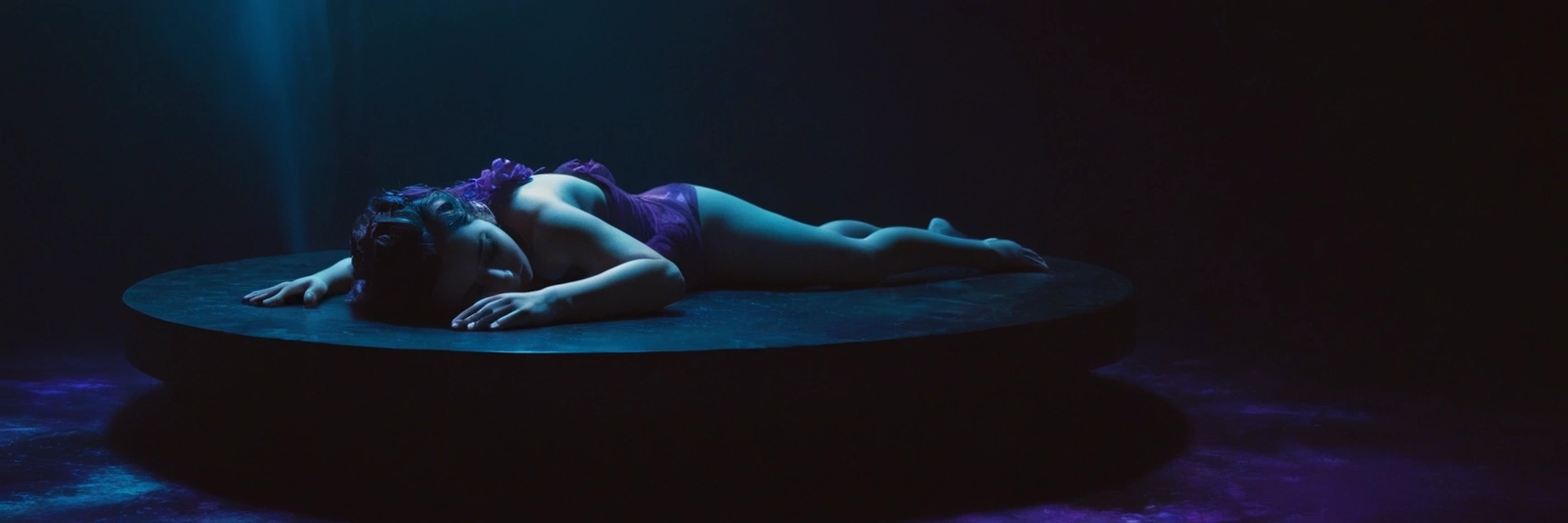
Transmuting Anxiety and Phobia in the Digital Ether of Second Life Game
Anxiety and phobia are paralyzing feedback loops where the mind perceives danger in the absence of immediate threat. Second Life (SL), a sophisticated user-defined virtual world, serves as a unique dual-purpose environment: it is both a “Safe Container” for clinical psychological intervention and a “Temenos” (sacred enclosure) for esoteric shadow work. This article explores the intersection of virtual reality exposure therapy and spiritual alchemy. We examine how the platform facilitates the desensitization of fear, the rewiring of neural pathways through the Proteus Effect, and the philosophical limitations of replacing physical reality with digital simulation.
The Esoteric Architecture of Fear: The Shadow in the Machine
From a Jungian esoteric perspective, anxiety is often the manifestation of the “Shadow” the repressed, frightened aspects of the self that scream for attention. In the physical world, confronting this Shadow is fraught with genuine risk (rejection, physical harm). Second Life acts as an Astral Training Ground.
Here, the avatar serves as spiritual armor. The anxious user can project their consciousness into a form that feels safer, stronger, or more anonymous. This separation allows the “True Self” to observe the “Fearful Self” from a third-person perspective. By navigating the virtual world, the user is essentially performing a controlled lucid dream, where the monsters are scripted but the emotional response is raw and real. It is a space to “die” and be reborn repeatedly without physical consequence, stripping fear of its ultimate power: mortality.
The Science of Safety: Virtual Reality Exposure Therapy (VRET)
Scientifically, Second Life is a prime example of Virtual Reality Exposure Therapy (VRET). Clinical psychology has long recognized that avoidance of fear stimuli maintains the anxiety disorder. SL provides the mechanism for Systematic Desensitization.
- The Hierarchy of Fear: In a clinical setting, a patient with agoraphobia cannot simply be dropped into a crowded stadium. In SL, the environment is scalable. They can start in a private skybox, open the door to a quiet terrace, then visit a small park, and finally attend a busy concert. The “anxiety dial” can be turned up or down instantly by the user.
- Social Buffering: For those with Social Anxiety Disorder (SAD), the physical cues of judgment (facial micro-expressions, tone of voice) are primary triggers. Text-based communication and the visual buffer of the avatar reduce the intensity of these cues. Studies in Cyberpsychology indicate that the anonymity of the avatar lowers the “fear of negative evaluation,” allowing socially anxious individuals to practice social scripts and interactions they would avoid in the physical world.
- Neuroplasticity and Rewiring: Clinical observations suggest that successfully navigating a stressful social situation in SL triggers the reward centers (dopamine) and strengthens the neural pathways associated with social competence. The brain begins to learn that “socializing = safety,” a lesson that can eventually transfer to the physical world.
Confronting the Abyss: Experiences with Phobias
The versatility of the SL platform allows for the specific targeting of complex phobias:
- Agoraphobia and Acrophobia: Users can stand on the edge of a kilometer-high skyscraper or fly over vast oceans. The visual stimulus triggers the physiological fear response (vertigo, heart rate), but the user remains physically seated in a chair. This creates a “dissonance” that the brain resolves by recalibrating its fear response.
- Social Phobia and Public Speaking: A user can join a virtual support group or become a DJ, speaking to hundreds of avatars. The “Proteus Effect” the phenomenon where individuals conform to the behavior of their avatar plays a crucial role. When an avatar looks confident and is dressed powerfully, the user’s behavior shifts to match that visual cue, reducing self-reported anxiety.
- Fear of Intimacy (Genophobia): The ability to control proximity (using the “camera controls” to zoom in or out, or “sit apart”) allows individuals with attachment disorders to explore intimacy at their own pace, breaking the association between closeness and suffocation.
Personal Development and the Trap of the False Sanctuary
While Second Life offers immense potential for growth, it presents a paradoxical limitation: The Trap of Avoidance.
- The False Summit: Overcoming a fear in SL provides a dopamine hit and a sense of accomplishment. However, if this validation is not sought in the physical world, the user may become “hyper-virtualized.” They may feel like a god in SL but remain a recluse in reality. The digital world becomes a crutch rather than a training wheel.
- The Distortion of Reality: The sanitized environment of SL is predictable. Scripts work; people can be muted; physics can be disabled. Real life is chaotic. Relying too heavily on the logic of SL can lead to increased frustration and anxiety when returning to the unpredictability of the physical plane.
Code of Good Practices: The Protocol of Integration
To transform anxiety into courage using Second Life, one must adhere to a disciplined code of integration.
- The Principle of Graduated Incursion
Do not rush. Treat every log-in as a therapeutic session. If you have social anxiety, set a goal: “I will say hello to one person today.” Do not overwhelm the nervous system. Celebrate small victories as if they were physical battles won. - The Ritual of Transfer
Knowledge gained in the dream must be applied in the waking world. After a successful interaction in SL, immediately perform a similar, smaller task in the physical world (e.g., order a coffee, make eye contact with a neighbor). This bridges the neural gap between the avatar’s confidence and the self’s reality. - The Integrity of the Avatar
Do not hide behind the mask permanently. While anonymity is a shield, relying on it exclusively can prevent genuine connection. Gradually reveal more of your authentic personality as your confidence grows. Let the “Digital Armor” become lighter over time. - Respecting the Trigger
If a specific situation in SL causes panic, do not simply “teleport away” immediately unless necessary. Pause. Breathe. Observe the feeling. Use the safety of the environment to sit with the anxiety until it passes. This is the essence of mindfulness and exposure therapy. - Professional Anchoring
Severe anxiety and phobias are clinical conditions. SL should be viewed as an adjunct to therapy, not a replacement for it. A therapist can guide the “in-world” experiences, ensuring they are constructive and reinforcing rather than reinforcing avoidance loops.
Conclusion
Second Life acts as a modern-day Alchemist’s laboratory. It accepts the “lead” of human anxiety and fear and, through the heat of virtual experience and the cooling of safety, attempts to transmute it into the “gold” of confidence. Clinical studies validate its efficacy as a tool for exposure and social scaffolding, while esoteric traditions view it as a necessary plane of shadow work. By walking the digital path with intention and courage, the anxious individual can learn that the monster under the bed is merely a shadow and that shadows cannot exist without the light.